An Initiative by Teqfocus · East Bay CXO Series
East Bay CXO
Newsletter
March 2026 · Execution Under Uncertainty: How CXOs Drive Clarity Without Certainty
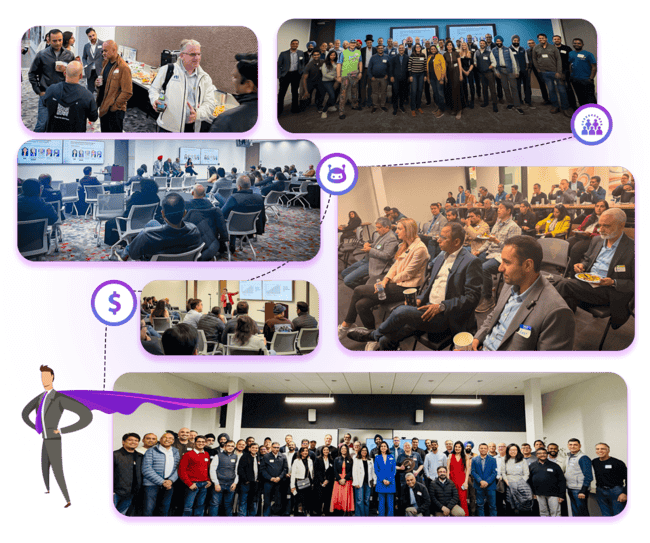
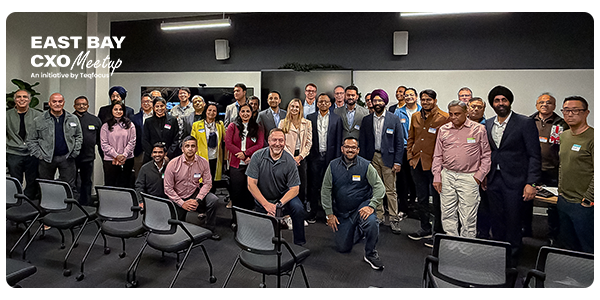
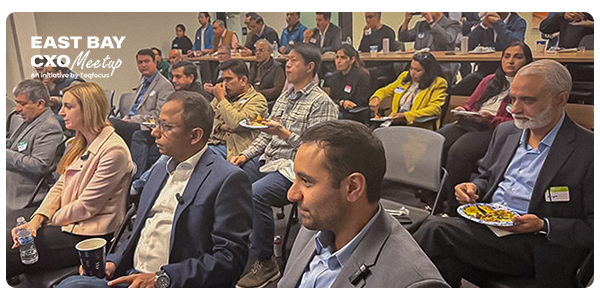
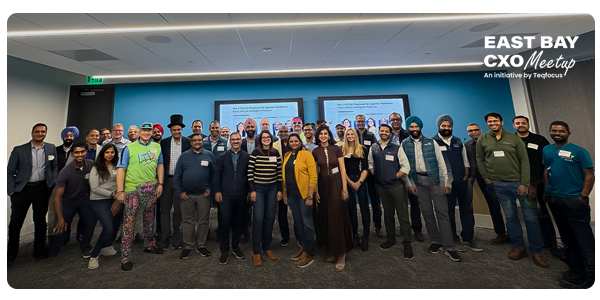
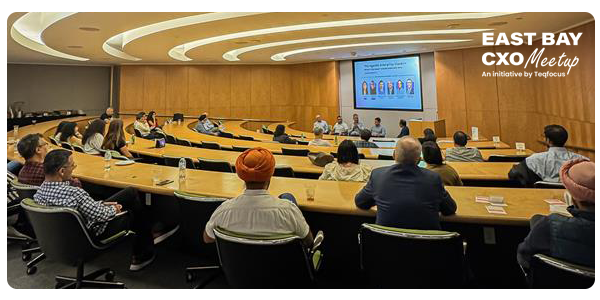
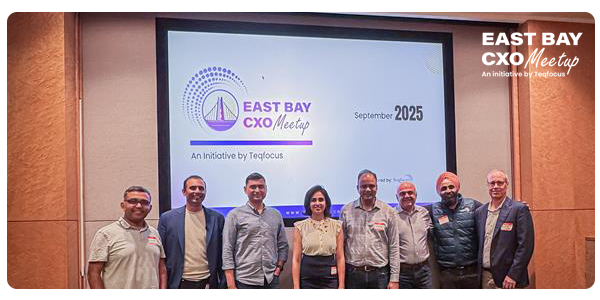
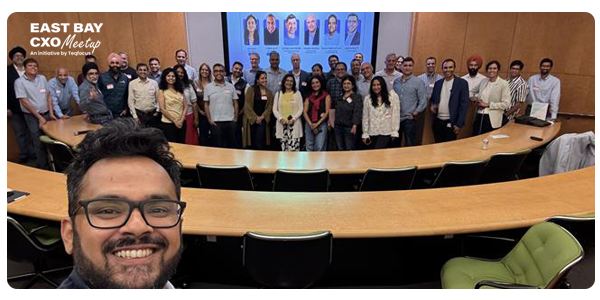
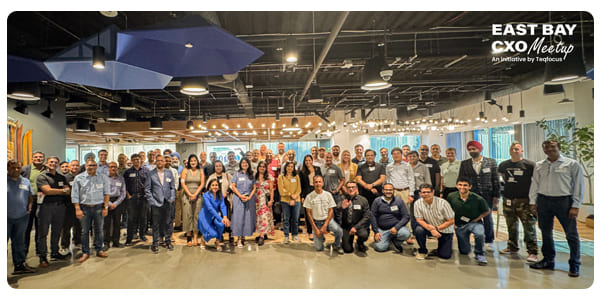
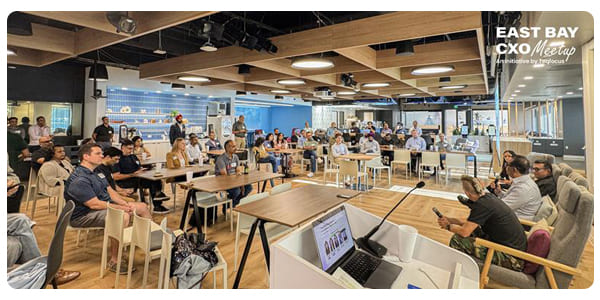
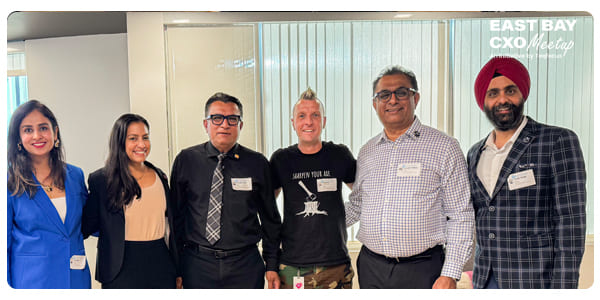
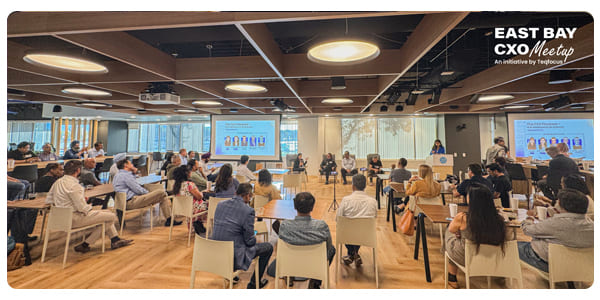
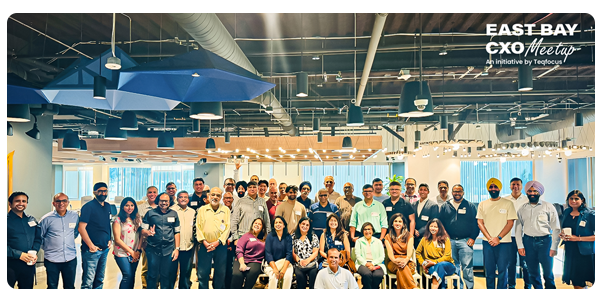
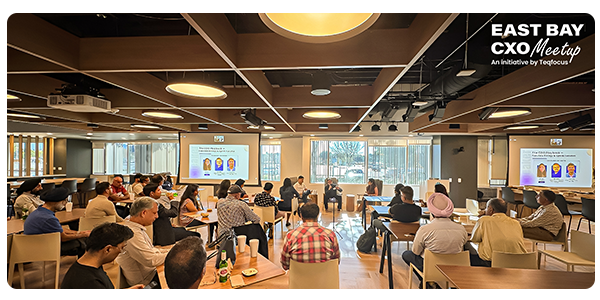
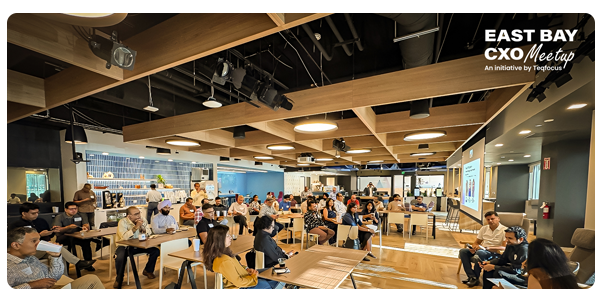
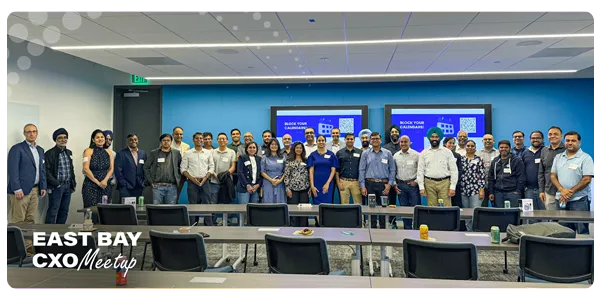
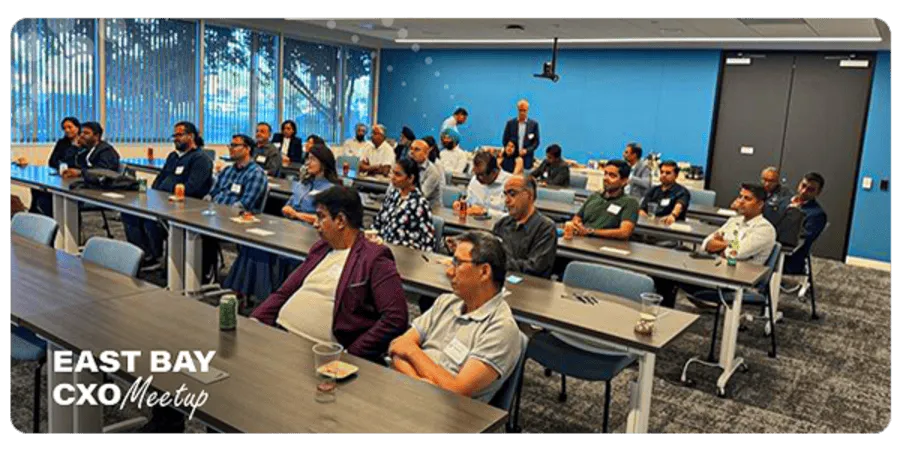
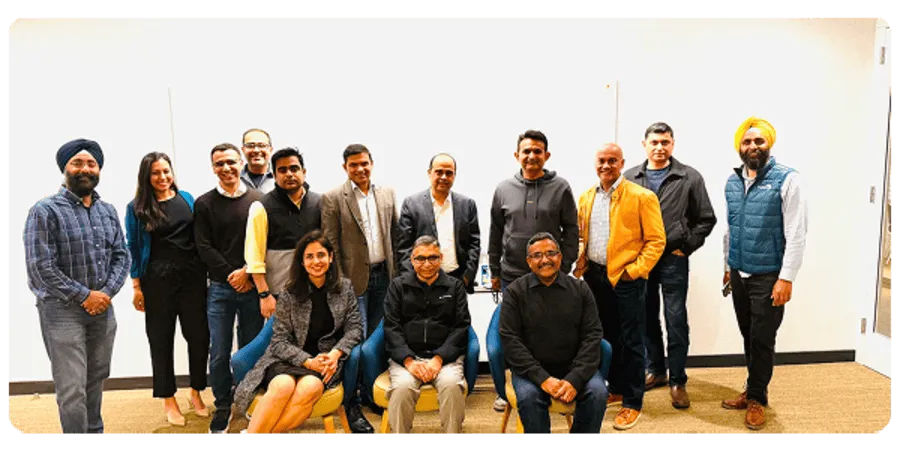
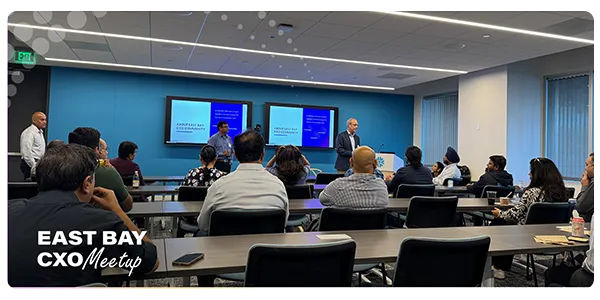
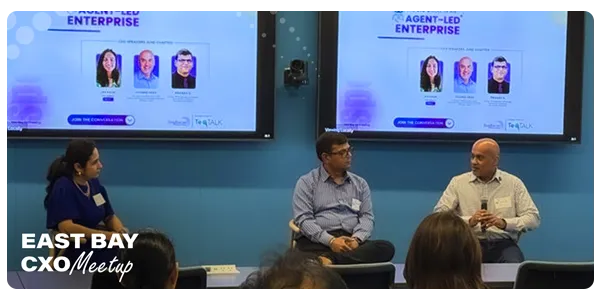
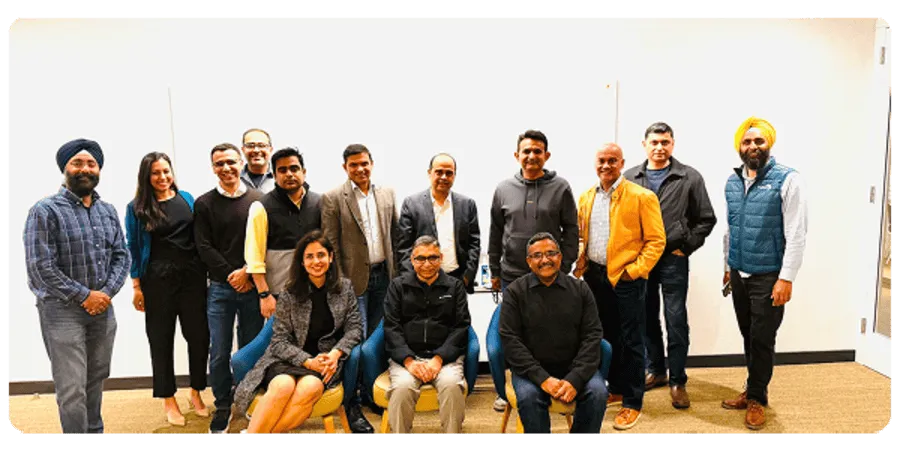
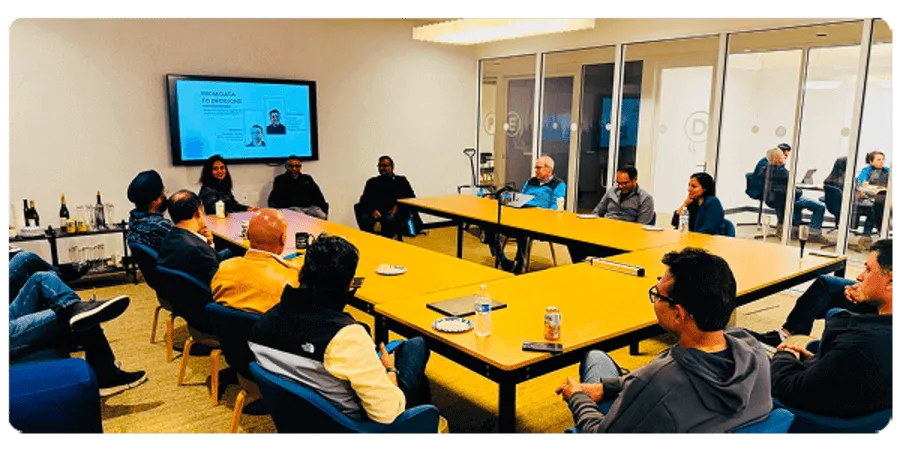
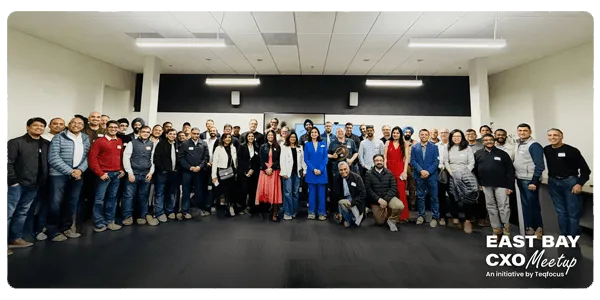
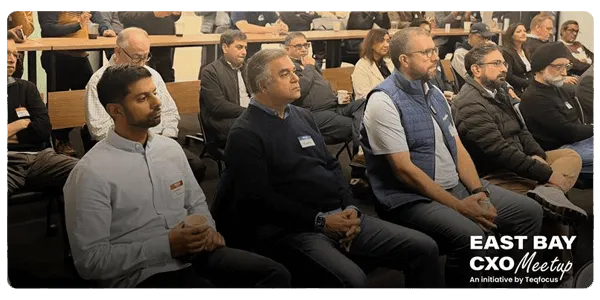
30+ East Bay technology leaders gathered on March 26 to work through a question most leadership teams are avoiding: when AI is making decisions faster than your organization can govern them, what is the actual job of leadership? The evening produced more clarity than comfort — which is exactly what it was designed to do.
We built the March conversation around execution and uncertainty. What I didn’t anticipate was how quickly the room would stop asking “how do we make better decisions” and start asking something harder: whether they were making decisions at all anymore.
Charles put a number to it that I haven’t stopped thinking about. If AI is making ten thousand micro-decisions a day inside your organization — routing, prioritizing, filtering, flagging — the leadership job doesn’t get easier. It gets different. You’re now responsible for the quality of the systems making those decisions, not just the hundred decisions you can see. Most organizations aren’t designed for that accountability. April is where we talk about what it takes to build one that is.
AI is not the risk. The risk is what we stop doing when AI starts working.
Every concern the room raised was a variation of the same pattern: leaders ceding judgment, accountability dissolving across systems, organizations moving fast in directions no one explicitly chose. The leaders who navigate this era won’t be the ones who use AI most. They’ll be the ones who stay clearest about what they refuse to delegate.
How to Make Decisions That Produce Clarity in Uncertain (AI) Times
Co-Founder, Business Ingenuity · Charles Follett
Charles reframed the room’s understanding of what a decision actually is — not a prediction, but a commitment that coordinates action. Drawing on the Language Action Model, he argued that AI can assert and assess, but it cannot commit. The moment a leader acts on an AI recommendation, they own the consequence in full.
He mapped four specific trade-offs that every AI deployment creates. Every CXO in the room was making at least two of those trades without having named them.
He also introduced a four-state model for how organizations function under AI conditions — Synergistic, Insular, Pluralistic, or Tumultuous — driven not by the tools in play, but by how Vision, Strategy, and Culture are aligned underneath them. Most enterprises believe they’re Synergistic. The data suggests otherwise.
His closing question set the tone for everything that followed: “What happens to Vision, Strategy, and Culture when AI is making ten thousand micro-decisions a day inside your organization?” The room didn’t have a clean answer. That’s the point.
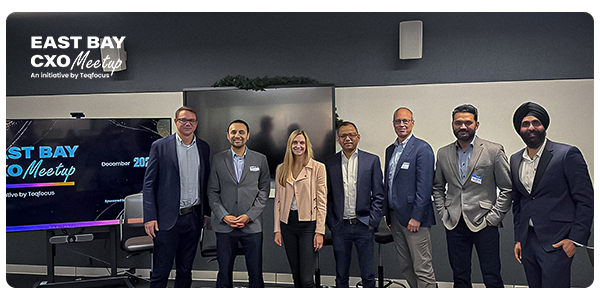
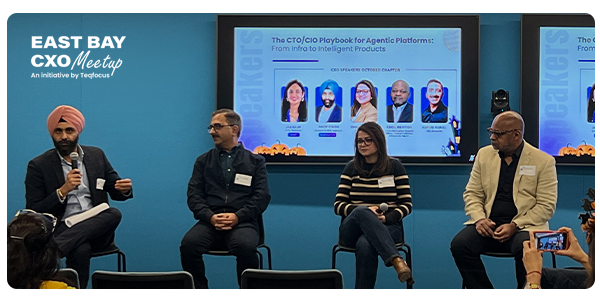
Moderated by Aman Bawa · Senior Technology & Execution Leader
Monisha Somji
Former Head of Digital, AI Transformation · Ex-WaymoThe gap isn’t strategy. It’s translation.
Most execution failures aren’t strategy failures — they’re the gap between intent and operating rhythm. Monisha’s framework for closing that gap starts long before a decision is needed.
Vishruta Kulkarni
Head of Analytics · MedallionAnalysis paralysis is an infrastructure problem.
The organizations that decide fastest aren’t the ones with the most data. They’re the ones that built the decision architecture before the pressure arrived.
Amrutha Suresh
Head of Enterprise & GTM AI · AsanaThe shift from operator to agent manager.
Deploying agentic tools on top of a human-operator model doesn’t create an AI-native organization. Amrutha laid out what the transition actually looks like — and where most companies stall.
Ayesha Mahmood
VP, Software Engineering · ZscalerGovernance before the model, not after.
Most enterprise AI governance is reactive. Ayesha’s Trust Architecture framework inverts that — governance is the first layer, not the audit that happens once things go wrong.
ProductNow
The world’s first System of OutcomesEvery enterprise function has a system of record — Finance has SAP, Sales has Salesforce, Engineering has GitHub. There is no equivalent for knowledge workers making product decisions. ProductNow is built to close that gap: an AI-native platform connecting context, creation, and alignment into one system.
Design partners include Meta, Amazon, Walmart, Google, Salesforce, Databricks, TikTok, and Zoom — and it ranked #1 in YC’s Request for Startups for Spring 2026.
Startups · 2026
design partners
Reimagining the Context Layer: Powering the Next Phase of Enterprise AI
The model isn’t the differentiator anymore. What sits beneath it is. And most enterprises are one architecture decision away from building on sand. If March was the diagnosis, April is where we talk about the architecture of the answer.
Space is intentionally small. Invite-only, candid,
The room doesn’t close when you leave.
The conversation continues on Slack — a private space for East Bay CXO members between gatherings. Apply for a seat at the next table, or reach out to contribute a perspective to the next issue.
Join Slack →What Drives Us
We believe that the most powerful ideas emerge when visionary leaders come together. Our CXO Summit is built to create that space — a trusted arena for bold thinking, candid dialogue, and transformative connections that move entire industries forward.