
Your AI programs are shipping. Who owns the KPI after go-live?
T-Mobile has made visible bets — IntentCX, network intelligence, digital operations at scale. The build is happening. The question no one answers cleanly is what runs the accountability layer after the build team rolls off.
 ×
×

About Teqfocus
The partner that owns the data layer and the application layer — and operates what it deploys
Most data platform engagements deliver a pipeline. Teqfocus delivers agents that run on it — and keeps them performing through AgentOps managed services.
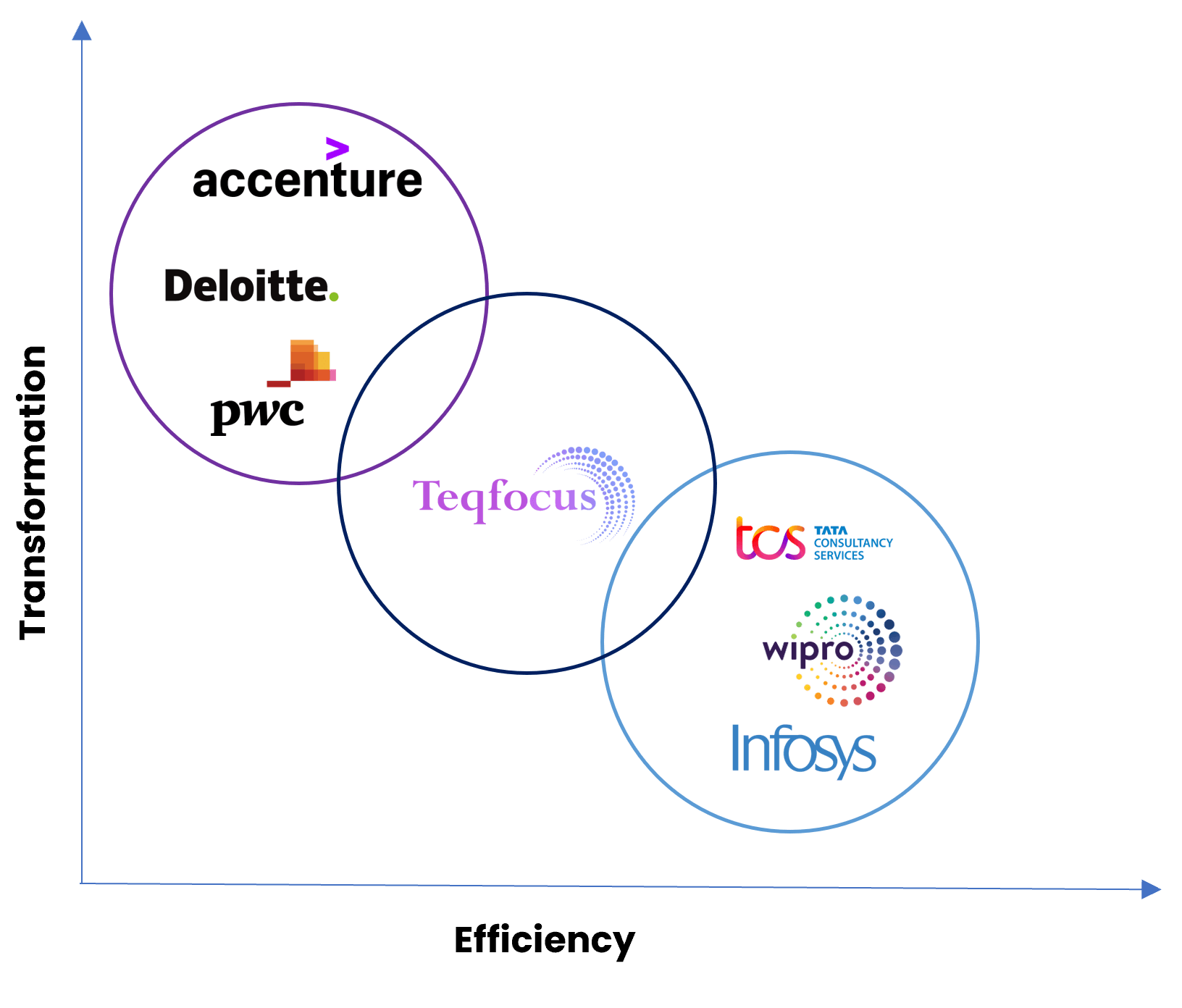
Market Positioning
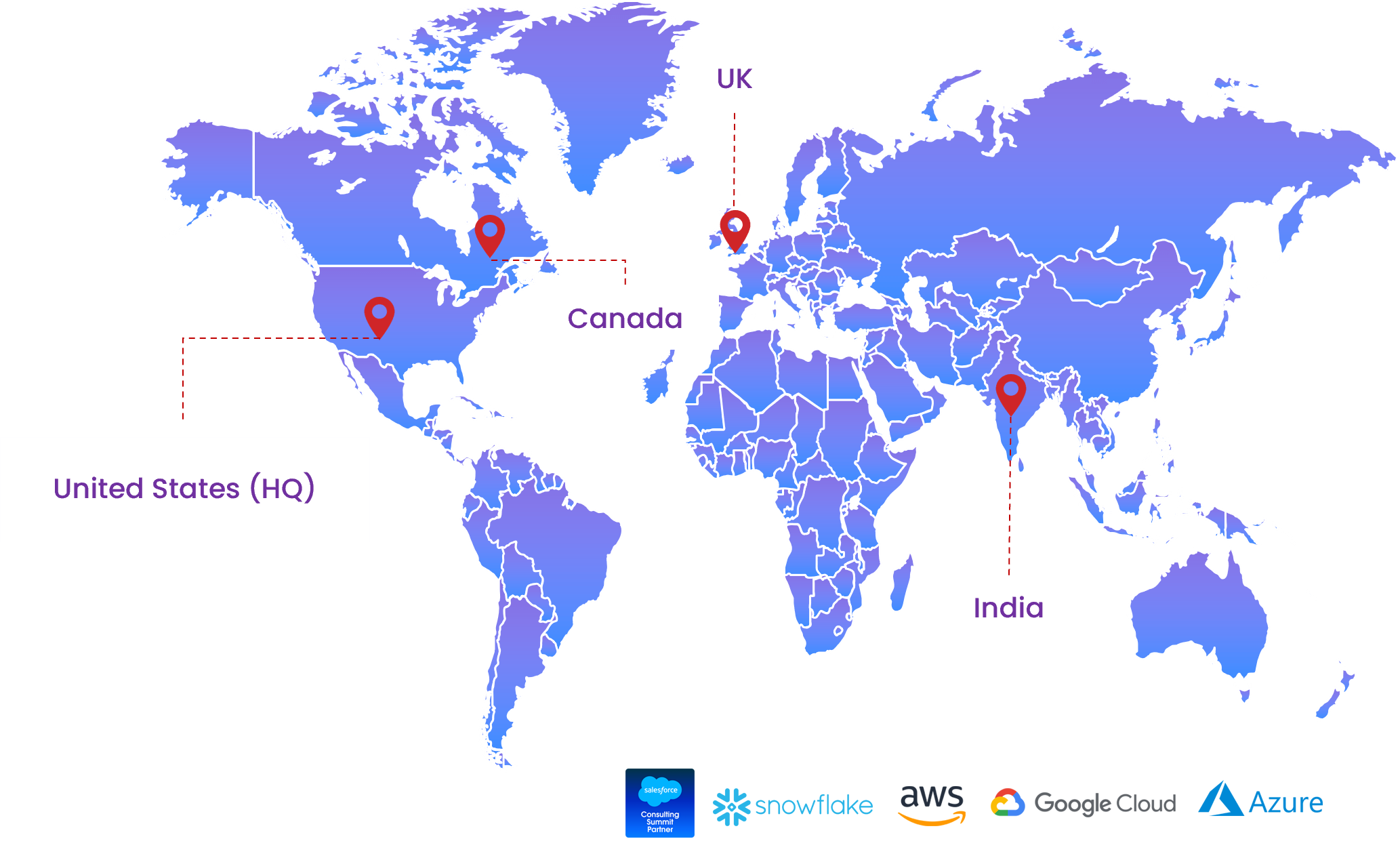
Global Presence
The The operational gap is not a T-Mobile problem.
It is an industry-wide failure mode.
Every enterprise AI program has a consistent breaking point: agents ship to production, build teams move on, and there is no standing function to own the live KPI, run the weekly tuning loop, or catch drift before it compounds into a business problem.
T-Mobile is running AI across Technology Operations, Supply Chain, and Finance Engineering — three verticals, each with distinct KPIs, none with a dedicated operator function.
Build teams complete their sprint and roll off. The live KPI moves — or drifts — with no one accountable for the weekly tuning loop, prompt adjustment, or edge-case triage.
Programs plateau six months post-launch. Confidence in AI erodes internally. Each new vertical reinvents the same substrate from scratch instead of compounding from what came before.
The operate function is missing.
Not the technology.
Three things your technology leadership should have in place before the next vertical goes live.
Embed the operator on the business side — not the engineering side
Most AI operations land with the engineering team. That is the wrong address. The weekly tuning loop, KPI ownership, and go/grow review belong with your Business Product Owners — the people accountable for outcomes, not code delivery.
When the operator reports to business, the AI program reports to the business.
Build the substrate once — use it across every vertical
Technology Operations, Supply Chain, Finance Engineering — three separate verticals should not each build their own eval harness, skills registry, and context graph from scratch. A shared substrate built on vertical one compounds into every subsequent deployment.
Vertical three costs materially less than vertical one to light up. That is the structural leverage no staff augmentation can replicate.
Transfer the capability — do not create the dependency
The right engagement builds permanent muscle in your team. Your Business Systems Analysts pair with forward-deployed engineers and become FDE-capable. Your Business Product Owners pair with the Operator pod and learn to run the tuning loop independently.
When the engagement matures, the capability stays inside T-Mobile.
B · F · O · S — one operating model,
four standing functions
Six Teqfocus people, dedicated to one vertical at a time, paired with your BSAs and BPOs. The pod that runs vertical one becomes the compound advantage for verticals two, three, and four.
Builds the shared substrate — context graph, skills registry, eval harness, governance layer. Built once on vertical one. Every subsequent vertical reuses ~40% of what was built here.
Forward-deployed engineers. Sit with your Business Systems Analysts. Ship use-case skills end-to-end. Hard roll-off when the use case is live and the Operator pod has taken the KPI.
Owns the live KPI. Runs the weekly tuning loop. Reports to your business — not engineering. The standing function that keeps AI working and improving after go-live.
On-call, governance enforcement, cross-product observability. The horizontal layer that keeps the substrate healthy across all live AI products simultaneously.
Same problem. Same stack.
Already solved.
A large operations organization running Salesforce + Databricks — agents live in production, no standing operator, KPI drifting six months post-go-live. Here is what happened when the pod embedded.
A 4-person Operator pod embedded on the business side — reporting directly to the VP of Operations, not engineering. Within 90 days: a weekly tuning loop was running, the live KPI dashboard was visible to business stakeholders, and the go/grow review showed first measurable KPI movement against baseline.
The Business Product Owners on the client team now co-lead the weekly review independently.
The substrate built on vertical one was reused across the second deployment at approximately 40% reduction in FDE effort. The Operator pod expanded to cover both products without adding headcount.
Technology Partners
Built on the platforms T-Mobile's data estate demands
Teqfocus brings Salesforce Summit, Snowflake Premier, AWS Advanced, and Databricks credentials — the right tool for the right layer, without single-vendor lock-in.

- Summit Consulting Partner
- 200+ Certified Experts
- Sales Cloud, Agentforce, Data Cloud
- Agentforce deployments for Hi-Tech enterprises

- Claude-powered agents in production across regulated industries
- 40+ enterprise Agentforce deployments grounded on Claude
- Teqfocus runs on Claude — we are our own first client

- Premier Services Partner
- 20+ SnowPro Certified
- 50+ customers
- Cortex Agents architecture, dbt governance, and data fabric design

- Certified Consulting Partner
- 20+ AI & data workloads
- MLOps pipelines
- AI governance frameworks and model monitoring

- Advanced Consulting Partner
- Data & Analytics Competency
- 150+ active engagements
- Cloud architecture for enterprise data platforms
Worth a 30-minute architecture conversation?
No deck. No pitch. A focused conversation about which of your three verticals has the clearest KPI — and what it would take to have an operator function running on it in 90 days.