
Autodesk completed the subscription transition.The data architecture didn’t follow.
Design subscription tiers, Construction Cloud seats, platform licenses — each vertical completed the move to SaaS. The ARR metrics, renewal cohorts, and customer health signals are still spread across Finance, Sales, and CS with no shared semantic layer. The number that goes to the board is always a reconciliation exercise.
 ×
×

About Teqfocus
The partner that owns the data layer and the application layer — and operates what it deploys
Most data platform engagements deliver a pipeline. Teqfocus delivers agents that run on it — and keeps them performing through AgentOps managed services.
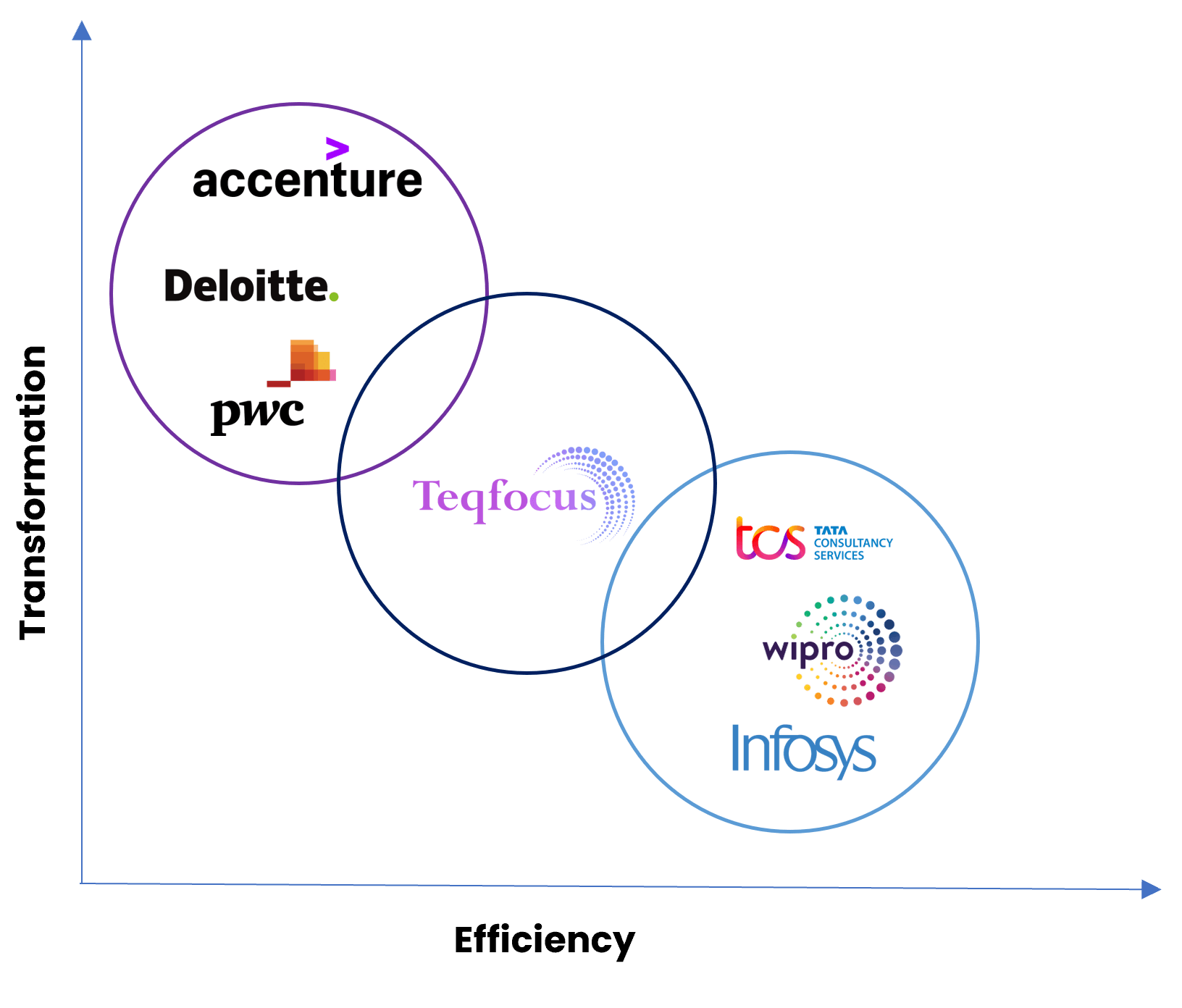
Market Positioning
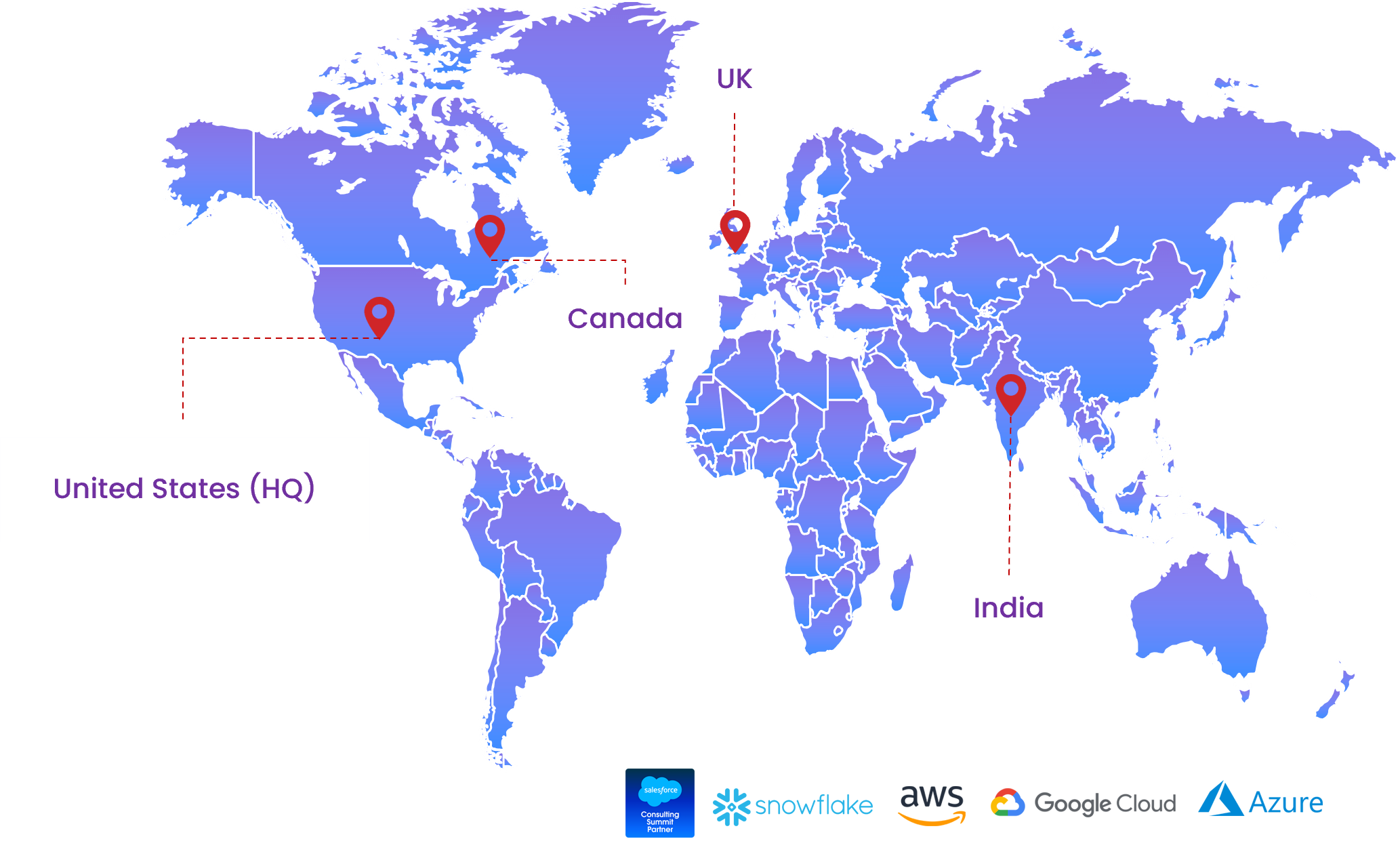
Global Presence
What we're seeing
Post-transition analytics still running on pre-transition architecture
Three revenue models, three data silos
Design subscriptions, Construction Cloud, and platform seats each carry different churn signals, cohort structures, and renewal logic. Point solutions built per vertical mean Finance, RevOps, and CS are working from different exports of the same underlying reality.
Tableau in the stack — the gap is what feeds it
Tableau is already trusted inside the business. The Tableau Next upgrade path paired with Data Cloud unification means every dashboard draws from the same semantic layer instead of individual team-maintained exports and manual reconciliations.
Metric definitions diverge at the team boundary
ARR means one thing to Finance, another to RevOps, and a third to the CS team managing renewal health. An Analytics COE standardizes the definitions once and makes them reusable — so every vertical pulls from the same truth rather than rebuilding it.
What this means for your team
Three things worth saying plainly
One ARR number, three systems — the reconciliation is the cost
Finance owns the contract data. Sales owns the renewal forecast. CS owns the health scores. Each team maintains their own version of the truth because the data architecture was never rebuilt to match the subscription model.
The number that goes to the board is assembled the night before from three different exports. That cost — in analyst time, confidence discount, and delayed decisions — is the real problem.
Data Cloud creates one semantic layer. Every downstream report draws from the same source.
Tableau is already trusted — the upgrade path is Data Cloud unification
The issue isn't the visualization layer — it's what feeds it. Individual dashboards today draw from individual team exports.
Tableau Next on top of Data Cloud means every report pulls from a shared semantic layer with governed metric definitions. The churn signal Finance sees and the health score CS sees come from the same data.
The upgrade path doesn't replace Tableau. It makes what your teams already built more consistent and more credible.
An Analytics COE is not a team — it's a shared operating model
The common failure: a company builds an analytics function, staffs it, then watches every vertical rebuild the same reports independently because the COE has no authority over metric definitions.
The right model is an operating framework — shared data contracts, governed metric definitions, reusable dashboard assets. Design, Construction Cloud, and the platform team each have different questions. The COE gives them a shared substrate to ask those questions against.
Finance and RevOps aligned on the same numbers before they reach the board. That is what the framework delivers.
Proof point
What this looks like in practice
Multi-vertical SaaS company — Data Cloud unification and Analytics COE build
A global SaaS company that had completed a perpetual-to-subscription transition came in with the same fragmentation: Finance, RevOps, and CS each running separate renewal models on separate data sources. ARR reconciliation was a recurring pre-board manual process. Tableau was in the stack across all three teams, with different dashboards pulling from different exports.
The engagement started with Data Cloud — ingesting CRM, finance, and CS platform data into a unified semantic layer with governed metric definitions for ARR, churn, and expansion. Tableau Next dashboards were rebuilt on top of that layer. The Analytics COE framework established data contracts so every new dashboard built by any vertical automatically inherited the shared definitions.
The pre-board reconciliation exercise was eliminated. Finance and RevOps shared one ARR source for the first time. CS health scores tied directly to renewal cohort data instead of running parallel. The second vertical cost less to onboard than the first — shared assets compound.
Technology Partners
Teqfocus brings Salesforce Summit, Snowflake Premier, AWS Advanced, and Databricks credentials — the right tool for the right layer, without single-vendor lock-in.

- Summit Consulting Partner
- 200+ Certified Experts
- Sales Cloud, Agentforce, Data Cloud
- Agentforce deployments for Hi-Tech enterprises

- Claude-powered agents in production across regulated industries
- 40+ enterprise Agentforce deployments grounded on Claude
- Teqfocus runs on Claude — we are our own first client

- Premier Services Partner
- 20+ SnowPro Certified
- 50+ customers
- Cortex Agents architecture, dbt governance, and data fabric design

- Certified Consulting Partner
- 20+ AI & data workloads
- MLOps pipelines
- AI governance frameworks and model monitoring

- Advanced Consulting Partner
- Data & Analytics Competency
- 150+ active engagements
- Cloud architecture for enterprise data platforms
Worth a 30-minute conversation?
The data architecture gap is fixable. Let's walk through how Data Cloud unification and an Analytics COE close it — for every vertical that touches ARR.