
Boku routes payments across four rails & 60 MNO partners.
Revenue attribution across all of them shouldn’t require a custom SQL query.
Salesforce Data Cloud + Tableau Next builds the unified analytics layer your payment rails, partner reporting, and merchant retention all depend on.
 ×
×

About Teqfocus
The partner that owns the data layer and the application layer — and operates what it deploys
Most data platform engagements deliver a pipeline. Teqfocus delivers agents that run on it — and keeps them performing through AgentOps managed services.
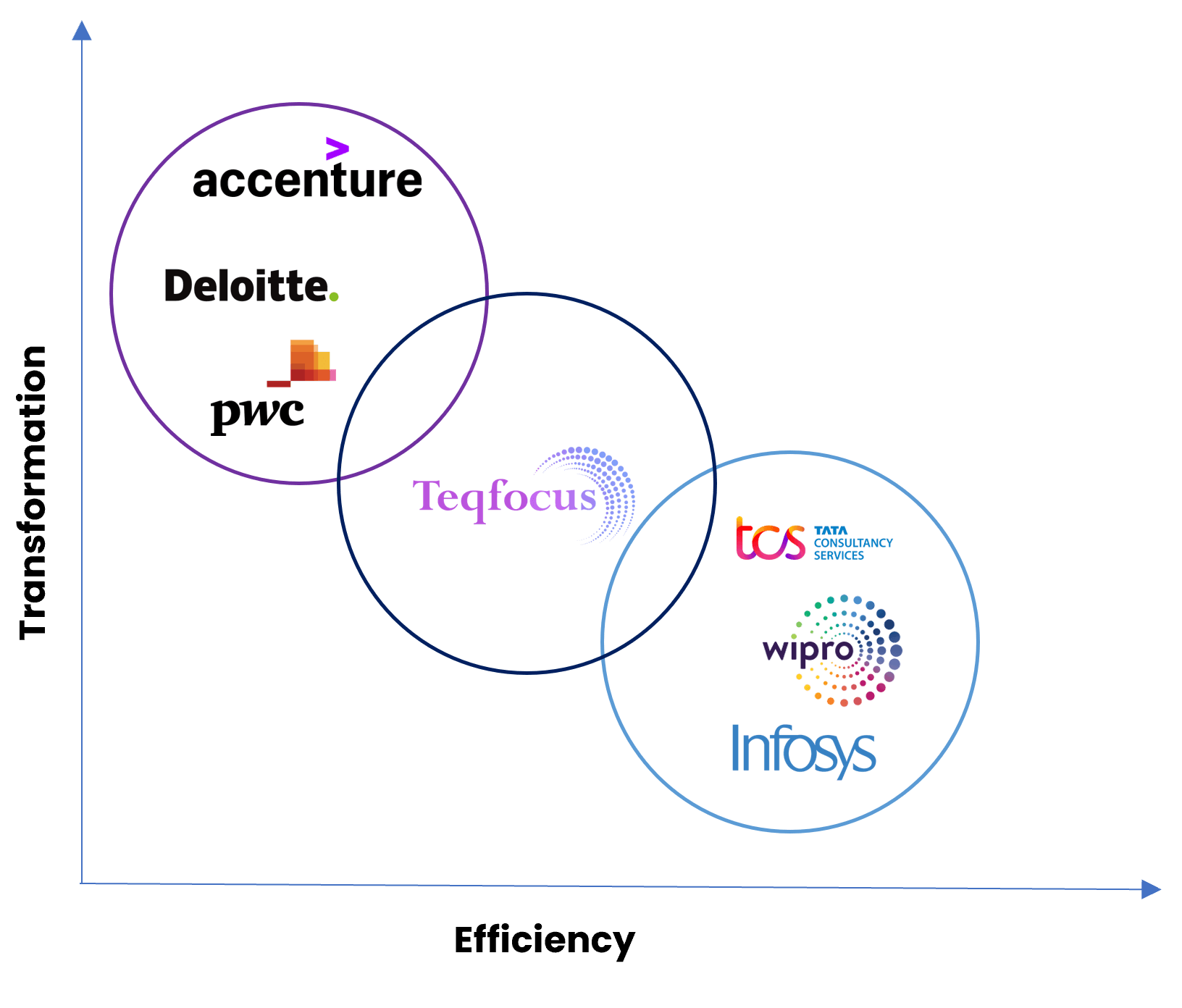
Market Positioning
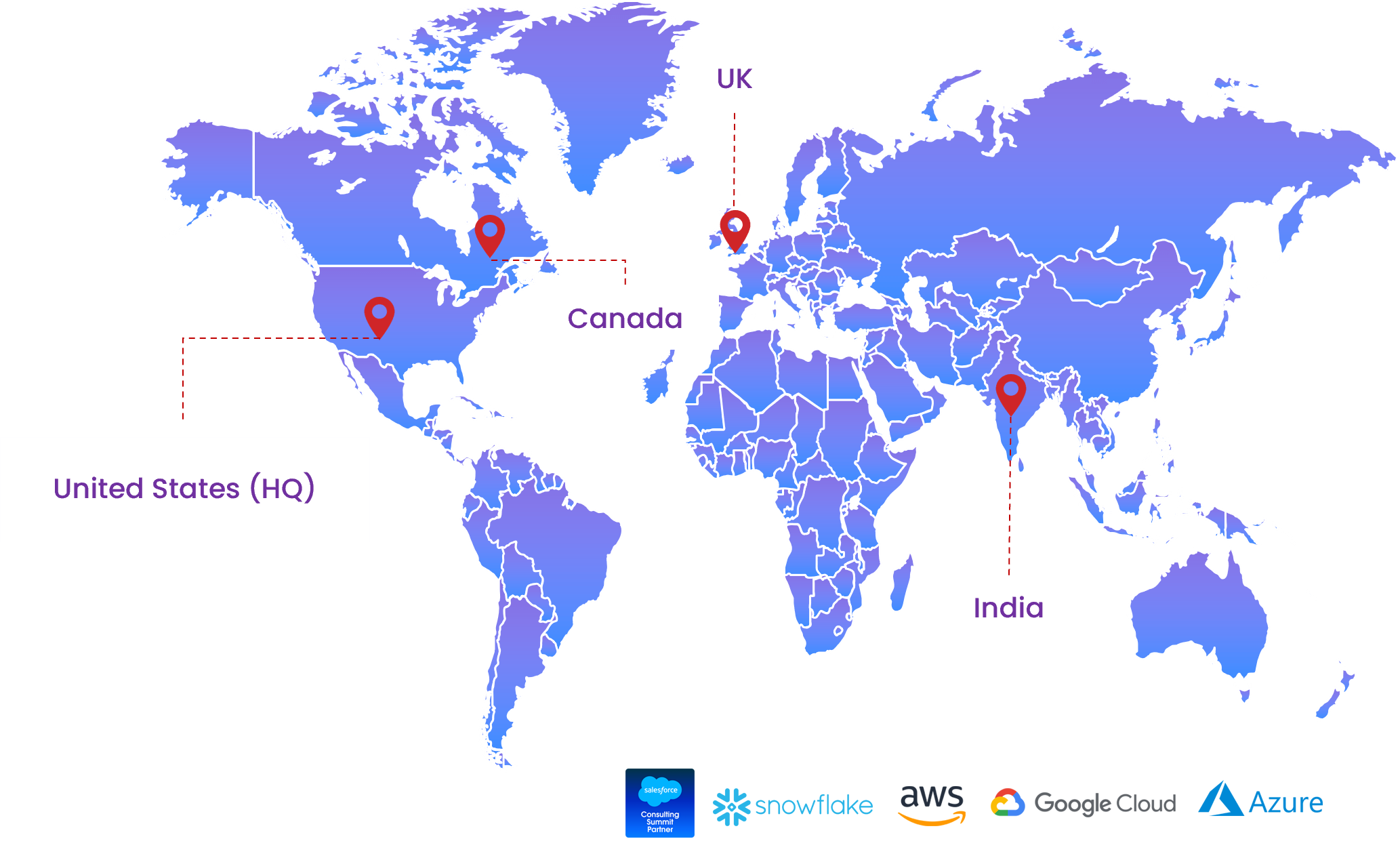
Global Presence
Why we're reaching out to Boku now
Four payment rails. 60 MNO partnerships. Merchant-side visibility requirements. The data complexity is the entry point.
Four payment rails means four data models that don't speak to each other
DCB, digital wallets, A2A transfers, and bundled payments each generate transaction data in different formats, with different settlement timelines and different fraud signatures. Producing a unified "successful payment" metric across all four rails today likely involves manual joins, analyst time, and a query that breaks whenever one rail's schema changes. That's not a reporting problem — it's a data architecture problem.
MNO partner attribution is a commercial relationship driver — and it's fragmented
With 60+ MNO partners, the ability to show each partner their exact contribution — volume, margin, fraud incidence, trend — is both a retention tool and a contract renegotiation lever. In many organizations in partner-specific reporting exports that take days to compile before a QBR. The partner who gets a live dashboard walks into every conversation with Boku from a position of transparency. That changes the commercial dynamic.
Merchant-facing analytics is a retention play waiting to be activated
Merchants processing across multiple Boku rails want unified visibility into their payment performance — which rail is converting best, where fraud is occurring, what the trend looks like across quarters. If that data requires a support ticket to access, it's a retention gap. If it's a live dashboard built into the merchant relationship, it becomes a switching cost and a product differentiator.
What this means for your team
Three places where Data Cloud + Tableau Next directly addresses Boku's multi-rail analytics complexity
Build the unified semantic layer across all four payment rails
Four payment rails means four data models — DCB, digital wallets, A2A, bundled payments each have different transaction structures, different failure codes, different fraud patterns. Data Cloud creates the unified semantic layer where a single metric definition for 'successful payment' or 'fraud rate' works regardless of which rail processed it. You stop writing per-rail queries and start asking questions about the business as a whole. The Analytics COE governs the definitions so they don't drift.
Turn MNO partner attribution from a quarterly spreadsheet into a live commercial asset
Knowing exactly which partner delivered which volume, at what margin, with what fraud incidence, is how you renegotiate contracts from a position of data rather than from a position of estimates. Tableau Next builds the partner-facing attribution dashboard that makes that conversation happen in real time — not three days after someone runs the report. For 60+ partners, the operational leverage of automating that reporting is measured in analyst hours per quarter.
Build merchant analytics as a product feature, not an internal report
Merchants who get a unified dashboard showing their payment performance across all Boku rails — with trend analysis, fraud flags, and rail-by-rail conversion benchmarks — have a concrete reason to stay and a concrete reason to consolidate more volume onto Boku. Data Cloud + Tableau Next builds that as an externally deliverable product layer, not just an internal reporting tool. That shifts the analytics investment from cost center to retention driver.
Proof of work
How we've done this before
Fintech / Payments — Multi-Rail Analytics Deployment
A fintech company operating across multiple payment rails had revenue attribution fragmented across partner-specific reporting exports. Partner QBRs required 3–5 days of manual data preparation. Merchant-facing reporting was handled through support requests rather than self-serve dashboards. Cross-rail fraud intelligence required joining data sets that were never designed to connect.
We deployed Salesforce Data Cloud as the unified semantic layer, ingesting transaction data from all payment rails into a single governed data model with consistent metric definitions. Tableau Next was configured for both internal partner attribution reporting and an external merchant-facing analytics layer. An Analytics COE framework was established to govern metric definitions and prevent schema drift as the rails evolved.
Partner attribution went from a quarterly spreadsheet requiring days to compile to a live dashboard accessible before any QBR. Merchant retention reporting became a product feature embedded in the merchant relationship rather than a support function. Cross-rail fraud intelligence was joined for the first time, surfacing patterns that single-rail reporting had obscured.
Technology Partners
Teqfocus brings Salesforce Summit, Snowflake Premier, AWS Advanced, and Databricks credentials — the right tool for the right layer, without single-vendor lock-in.

- Summit Consulting Partner
- 200+ Certified Experts
- Sales Cloud, Agentforce, Data Cloud
- Agentforce deployments for Hi-Tech enterprises

- Claude-powered agents in production across regulated industries
- 40+ enterprise Agentforce deployments grounded on Claude
- Teqfocus runs on Claude — we are our own first client

- Premier Services Partner
- 20+ SnowPro Certified
- 50+ customers
- Cortex Agents architecture, dbt governance, and data fabric design

- Certified Consulting Partner
- 20+ AI & data workloads
- MLOps pipelines
- AI governance frameworks and model monitoring

- Advanced Consulting Partner
- Data & Analytics Competency
- 150+ active engagements
- Cloud architecture for enterprise data platforms
Worth a 30-minute conversation?
If multi-rail attribution, partner reporting, or merchant analytics are on your roadmap, the 30 minutes is worth it.