
AI-Powered Transformation for Sanofi’s Patient Support Programs
Coordinators spend 60–70% of their day on admin — not patients. Teqfocus deploys AI that eliminates the manual work in enrollment, prior auth, and patient engagement. Live in production in 10 weeks. No discovery phase.
 ×
×

About Teqfocus
The partner that owns the Salesforce layer and the data layer —and operates what it deploys
Most Agentforce implementations fail at the data layer. Teqfocus is one of the few partners that owns both — and one of fewer still that governs, tunes, and maintains agents after they go live. That’s not a feature. That’s the business model.
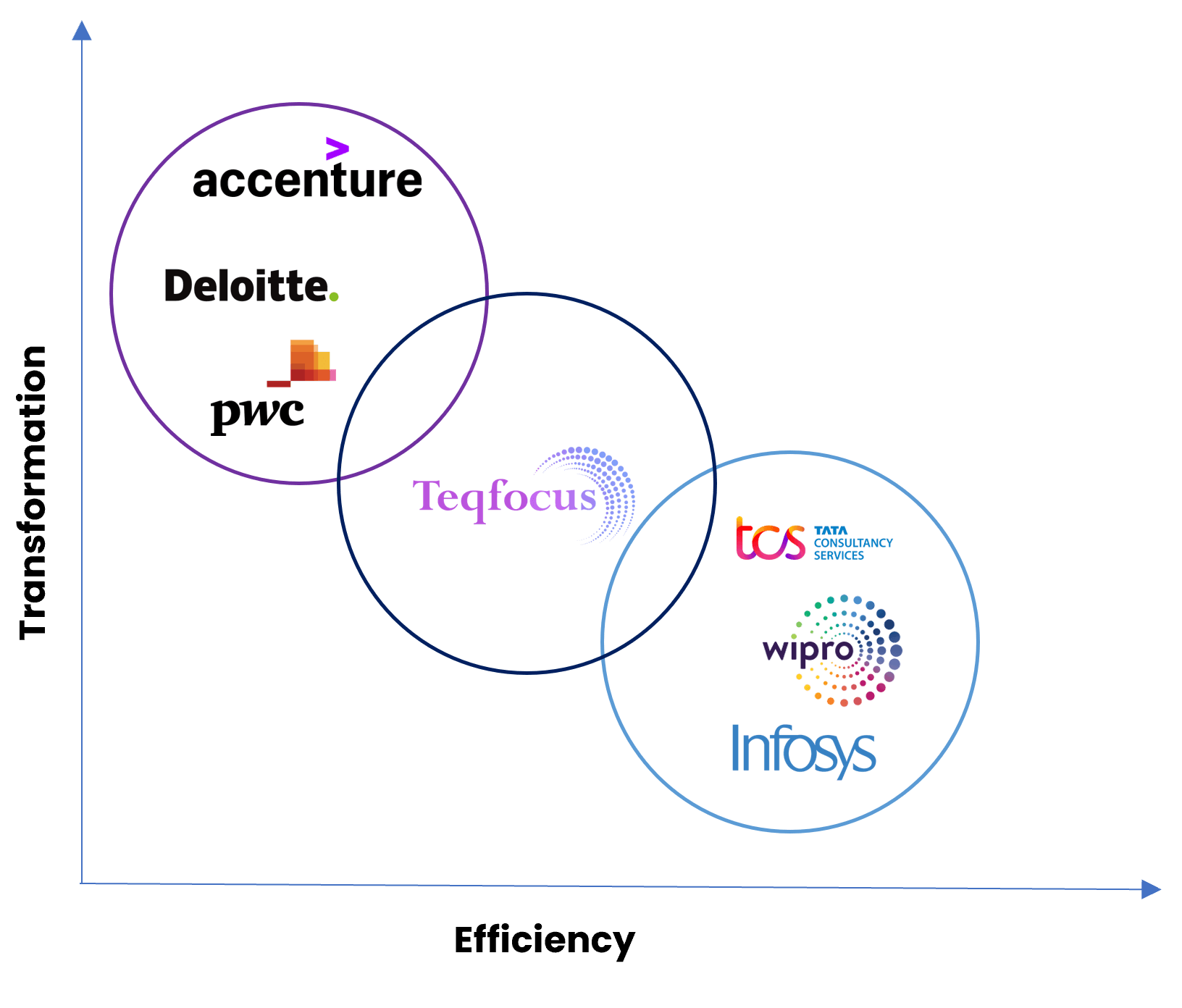
Market Positioning
Global Presence
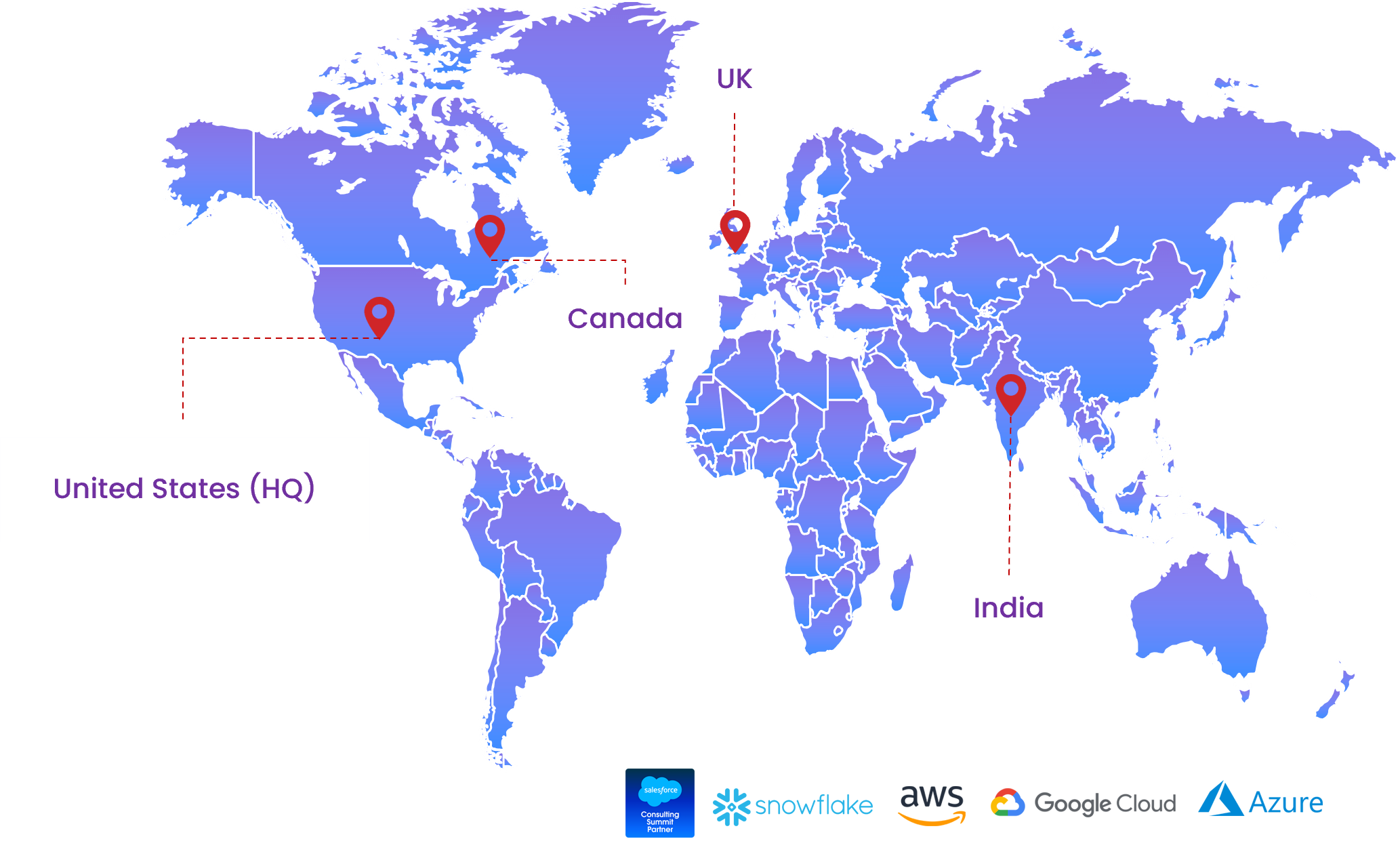
The Opportunity
Dupixent PSP has the right ambition — and the right testbed to prove AI at scale
Sanofi is already investing in AI for PSP. The opportunity is to move from isolated experiments to production-grade AI that coordinators use every day — starting with Dupixent, then expanding across the portfolio.
Enrollment, intake, and prior auth are prime candidates for AI automation — and they compound each other
Manual SRF processing, fax-based referrals, and PA form-filling each add days to time-to-therapy independently. Automating them in sequence — intake feeds PA, PA feeds case management — produces compounding gains. These aren't separate projects; they're one connected workflow with one data model underneath.
Coordinator effectiveness is a data problem as much as a workflow problem
Without a unified CRM for PSP in Canada, coordinators make decisions without the full picture — which patients are at dropout risk, whose PA is about to expire, where the SLA clock is running. A Next-Best-Action engine that surfaces the right action for the right patient at the right moment transforms coordinator capacity without adding headcount.
Vendor-controlled data limits Sanofi's ability to act — integration is the prerequisite for AI
Hub vendors like McKesson control significant portions of the patient journey data. Layering AI on top of the existing stack — without replacing vendor relationships — requires a normalization layer that connects your data systems and payer APIs into a single actionable view. That integration architecture is where AI initiatives stall or succeed.
Teqfocus AI Demos
Four high-impact agents, ready to pilot
Each agent addresses a named pain point in Sanofi's PSP workflow. Each is a candidate for a 10-week pilot. Together, they form a complete AI-powered PSP operating model — deployable on your existing technology stack.
AI Next-Best-Action Engine — coordinator action queue, pre-drafted scripts
AI ranks patients by dropout risk and urgency across the full book of business. Coordinator sees the action, the reason, and a pre-drafted outreach script. One-click close. No separate data entry. AI recommends; coordinator decides.
AI Intake & Enrollment Automation — same-day enrollment vs. 3–5 day lag
AI reads incoming SRFs — fax PDF, web form, HCP portal — extracts all fields, deduplicates against existing records, and pre-builds the case in the system of record. Coordinator reviews and approves in one click. Missing fields trigger an auto-message to the clinic. No manual keying.
Intelligent Prior Authorization — 10-day PA cycle compressed to 2–3
AI reads the patient's clinical profile, fills the correct payer-specific PA form, attaches supporting documents, and scores denial risk before submission. If denied, AI drafts the appeal letter from the clinical evidence library. Coordinator reviews and sends.
Personalized Patient Journey Engine — dynamic segmentation, every touchpoint adapts
Newly diagnosed patients get education-heavy onboarding and nurse visit prioritization. Experienced patients get proactive refill automation and minimal touchpoints. At-risk patients trigger intensive coordinator outreach. The AI adapts channel, frequency, content, and financial triggers per patient — in real time.
Keep every agent performing after go-live
Built on your existing stack — no new infrastructure, no new vendor relationships.
Compliance — continuous PIPEDA and PHIPA posture monitored per agent, with on-demand audit reports cited to exact regulatory text
Agent performance — latency, token consumption, and response quality tracked per agent so degradation is caught before it reaches coordinators
Observability dashboards — agent health, utilization, and effectiveness surfaced in dashboards queryable by operations and compliance teams
Outcome accountability — Teqfocus owns the fix, not just the alert
Compliance & Privacy
Patient privacy isn't a constraint we work around — it's a requirement we build to
Every agent Teqfocus deploys is designed for PIPEDA and PHIPA compliance from day one. Sanofi retains control at every layer.
Human-in-the-Loop AI
AI recommends; coordinators decide. No autonomous patient-facing actions without human review — by design, not by policy.
Data Stays Within Sanofi's Control
All data stays within Sanofi's environment. Nothing leaves to external AI training pipelines. Sanofi retains full data ownership.
De-identification Layer
Patient identifiers stripped before any model inference. PIPEDA and PHIPA compliant by design — not retrofitted after go-live.
Role-Based Access
Coordinator, manager, and field agent views are permission-gated. Full audit trail on every action, every interaction.
No Vendor Re-routing
Teqfocus layers on top of existing vendor relationships — McKesson, specialty pharmacies, payers. No new data flows without Sanofi's approval.
Release Gate with Sanofi
Sanofi retains approval authority on every production release. No surprise deployments. Biweekly steering cadence throughout.
Technology Partners
Layering on top of Sanofi's existing stack
Teqfocus integrates with Snowflake, Power BI, Coupa, and McKesson APIs. Your existing investments stay. We add the AI and Salesforce surface on top.

Salesforce
- Summit Consulting Partner
- 200+ Certified Experts
- Health Cloud, Life Sciences Cloud, MuleSoft
- 1,000+ healthcare customer success stories

Snowflake
- Premier Services Partner
- 20+ SnowPro Certified
- 50+ customers
- Healthcare-first data fabric accelerators

Databricks
- Certified Consulting Partnert
- 20+ AI & data workloads
- MLOps pipelines
- AI governance frameworks and model monitoring

AWS
- Advanced Consulting Partner
- Data & Analytics Competency
- 150+ active engagements
- Cloud architecture for enterprise data platforms
Engagement Model
From kickoff to live AI — in 10 weeks
One use case. One dedicated pod. Live in production by week 10. No separate discovery phase — assessment happens in sprint week one.
Org Access & Use Case Scoping
- System access confirmed — read access to relevant data sources
- Use case selected with Sanofi coordinators
- AI model data requirements defined
- Integration points mapped — Snowflake, McKesson, payer APIs
Build, Configure & Integrate
- AI model built and configured on your technology stack
- Flows, automations, and data connectors developed
- Payer and McKesson API integrations live
- UAT with Sanofi coordinators — edge case resolution
Go-Live & Hypercare
- AI capability live in production
- KPI baseline captured — before vs. after tracked
- Coordinator training and adoption support
- Hypercare and AgentOps monitoring activated
Let's build Sanofi's AI-powered PSP.
A focused workshop to align on the highest-priority use case, confirm the data requirements, and set the 10-week clock. No slides. No discovery phase. A working session on what goes live first.