The agentic enterprise
isn’t a stack problem. It’s an operating-model problem.
Workday’s UAP architecture is sound. What determines time-to-market is whether the data and delivery substrate can ship at market pace — and whether the GTM org adopts an operating model that consumes it efficiently. Three moves: two on the platform, one on the GTM stack.
 ×
×
About Teqfocus
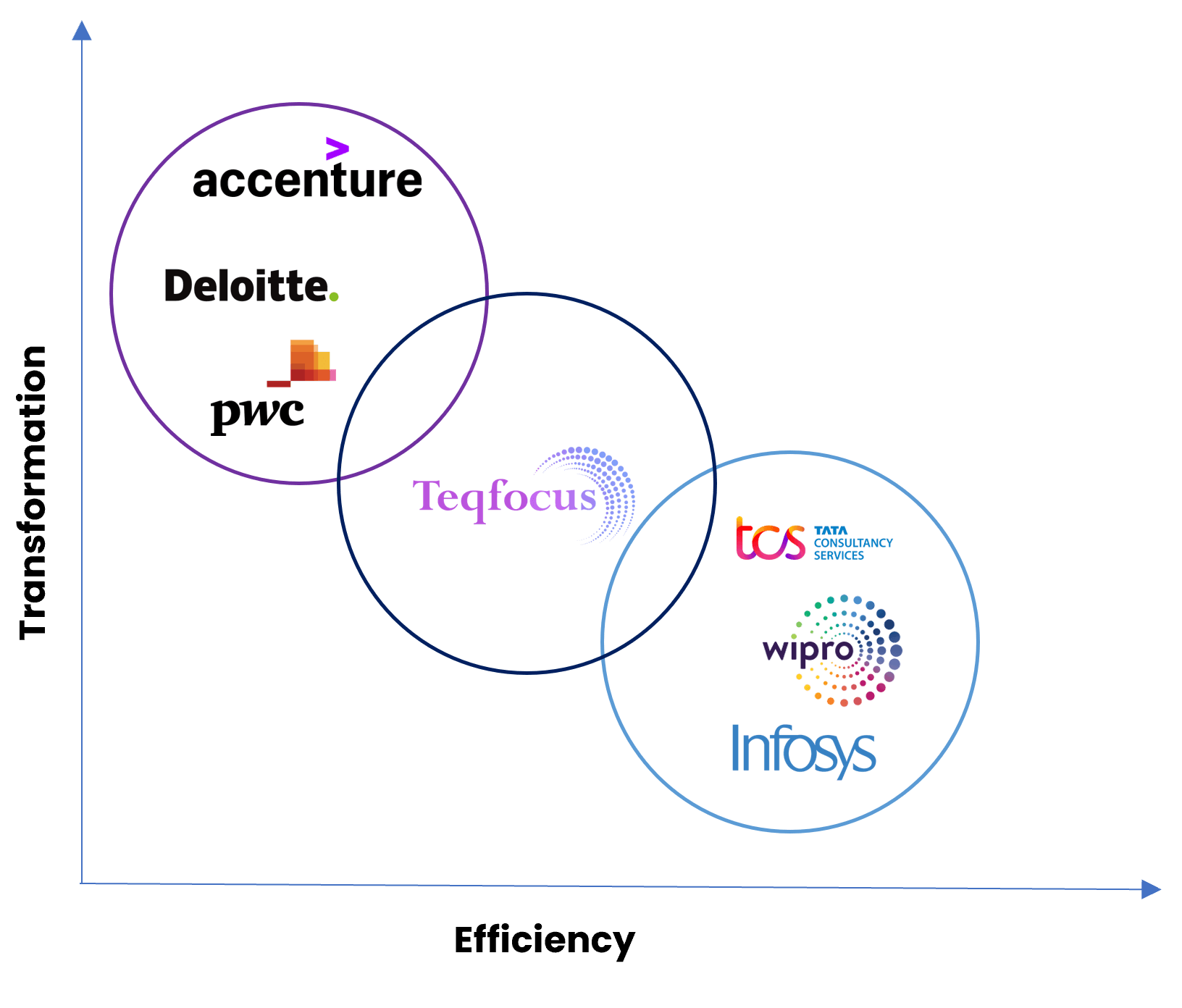
The partner that owns the data layer and the application layer — and operates what it deploys
Most data platform engagements deliver a pipeline. Teqfocus delivers agents that run on it — and keeps them performing through AgentOps managed services.
Market Positioning
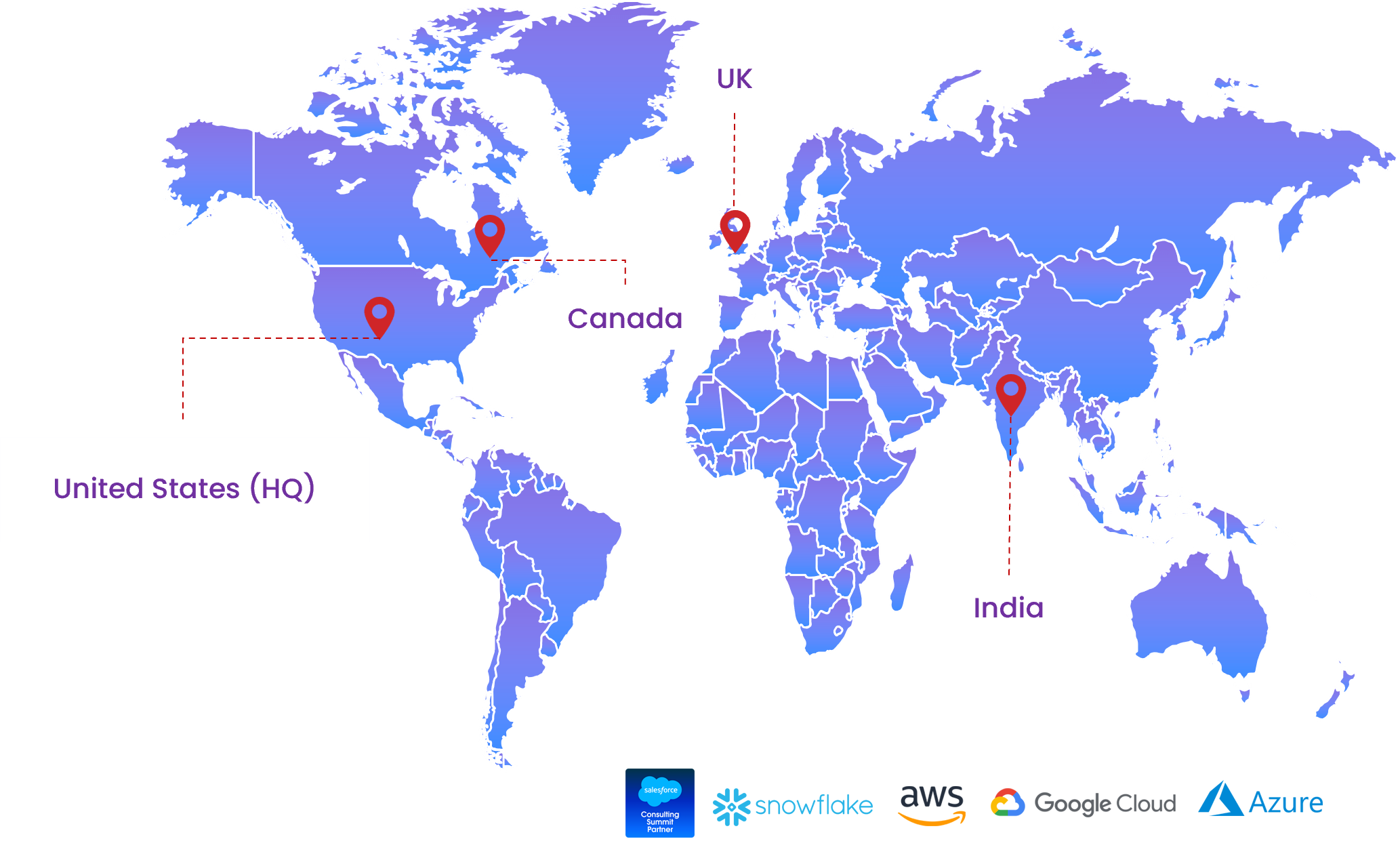
Global Presence
Where Workday Stands
Right architecture. The question is execution velocity.
Microsoft, ServiceNow, and Salesforce are shipping agent capabilities into enterprise accounts every quarter. Workday's UAP — unifying Snowflake, Databricks, and Redshift with MCP as the connective protocol — is the right answer for Finance and HR. The constraint isn't vision. It's whether engineering depth, GTM readiness, and platform cost are aligned to the pace the market is moving. Teqfocus has operated inside Workday's stack since 2025 — UDL, Data Cloud, Platform AMS, and GTM applications. The perspective below is grounded in that direct operating context.
UAP is racing a market clock, not just an internal one
"Right architecture, late to market" is not a winning position. Generic contractor pools that ramp on Workday's stack over six weeks are a material delivery risk right now.
An enterprise AI company whose GTM runs on legacy workflows is visible to buyers
Workday sells AI-powered transformation to its customers. The commercial org needs to embody that — as the operating model the field runs on today, not a future state.
Same-shape pods don't scale to the agentic enterprise
Today's GTM ships features by adding pods. Cost and headcount scale linearly with scope. The agentic shape needs a different operating model — three teams instead of many same-shape ones.
Part 1 · The Platform
Two moves on the substrate every GTM agent will depend on.estate
Engineering depth, delivery velocity, and platform cost — the foundation under everything that follows. These are the decisions to make first, because the GTM operating model in Part 2 only delivers as fast as the substrate underneath it.
Move 01 · UAP Substrate
The UDL POC with Casey/Phoenix and Data 360 activation are foundational decisions for the platform. The constraint is pre-vetted engineering depth that executes against cadence on day one. Two co-located Pune pods deliver the FDE + Builder layers: UDL (data pipelines, ingestion, MLOps, DataOps) and Data 360 (Salesforce Data Cloud activation, unified profiles, MCP-layer integration). Q2-ready, scrum-governed, $50,400/month combined.
→ Outcome:
Time-to-production compressed on the data substrate every GTM agent will depend on. Architecture decisions made with full vendor optionality — not constrained by SI capability gaps.
Move 02 · Platform Cost & AgentOps
Today, Teqfocus runs 3,106 platform tasks per quarter at 89% SLA on 24×5 coverage. The near-term opportunity is taking cost out of AMS, enhancements, and KTLO — without degrading the velocity the UAP buildout depends on. The next chapter: AgentOps. Once agents are live, they fail silently — missing permissions, ungrounded answers, runaway token cost. Building agents and running agents are two jobs with two cadences.
→ Outcome:
Capital freed for forward investment today. Same operating partner ready when AgentOps becomes the live conversation.
The GTM stack, reset for AI.
The substrate Move 01 builds is only as valuable as the consumption model on top of it. Same-shape pods don't scale to the agentic enterprise — three teams do.
The Shift · Many Pods to Three Teams
Six domains. Many pods each. The same shape, repeated dozens of times.
Today's GTM ships features by adding pods. Headcount and cost scale linearly with scope. The shift: replace the pods in a domain with three teams — each with a distinct job to do.
Same-shape pods, repeated across six domains.
Three roles, one substrate — reused across every use case.
The Three Teams · Roles in Detail
FDE wires the tools. Builder wires the substrate. Operator ships the outcome.
Each team has a distinct artefact and a distinct cadence. Standing up only two of three breaks the loop.
Use-case forward-deployed engineers.
A small, embedded crew that lights up each new GTM use case end-to-end — without them, neither Builder nor Operator can ship.
Wires the AI substrate the domain runs on.
A core team that builds the agentic layer once, then reuses it across every Sales, Service and Revenue use case.
Turns the substrate into shipped features.
An operating team that uses Builder tools to deliver user stories — and continuously tunes agents against business KPIs.
The Flow · How the Three Teams Work Together
Each team hands off a different artefact — and the loop runs continuously.
Build the tools for a new use case.
Lights up the integrations and agent-callable skills the use case needs. Hands them to Builder.
Wire the tools into the substrate.
Adds new skills to the agent topology, extends the context graph, applies governance. Hands the substrate to Operator.
Ship features & tune outcomes.
Delivers user stories on the substrate, tunes agents weekly against KPIs, and feeds new business problems back to FDE.
Make Workday's commercial motion the proof point for the AI it sells
Workday-in-situ process knowledge from the team already embedded in BT GTM, paired with Hi-Tech Agentforce delivery experience. Operator ships features against the substrate; GTM-FDE wires Salesforce, CPQ, billing and scheduler as agent-callable skills. Target state: 24×7 AI SDR, AI upsell, lead-to-cash and intelligent forecasting — running on the operating model, not adding to it.
The Ask
Pick one domain. Three teams. Ninety days.
FDE, Builder, and Operator stood up together in one pilot domain — Service (GTM Now) or Sales (GTM Next). Standing up only two of three breaks the loop.
Choose & Commit
- Choose pilot domain — Service or Sales
- Approve all three teams together (~20 people)
- Sign off success metrics: cost, TTM, agent quality
- Set the day-90 review with leadership
Stand Up & Ship
- FDE wires tools and integrations for first use case
- Builder wires the substrate and governance
- Operator ships first user story on the substrate
- Cost and KPI baseline measured against today
Measure & Decide
- Cost burden vs. baseline measured
- Time-to-market for one named capability
- Agent-quality KPIs reviewed live
- Go / no-go on rolling the model to next domain
Technology Partners
Built on the platforms Okta's data estate demands
Teqfocus brings Salesforce Summit, Snowflake Premier, AWS Advanced, and Databricks credentials — the right tool for the right layer, without single-vendor lock-in.
- Summit Consulting Partner
- 200+ Certified Experts
- Sales Cloud, Agentforce, Data Cloud
- Agentforce deployments for Hi-Tech enterprises
- Premier Services Partner
- 20+ SnowPro Certified
- 50+ customers
- Cortex Agents architecture, dbt governance, and data fabric design
- Certified Consulting Partnert
- 20+ AI & data workloads
- MLOps pipelines
- AI governance frameworks and model monitoring

- Advanced Consulting Partner
- Data & Analytics Competency
- 150+ active engagements
- Cloud architecture for enterprise data platforms
The working session — structured around the three moves.
Part 1 · The Platform · UAP substrate velocity · platform cost & the path to AgentOps. Two moves on the foundation. Part 2 · The GTM Stack · The three-team operating model — FDE, Builder, Operator — and a 90-day pilot domain.