
Gainsight helps enterprise teams build AI-powered customer success programs. Who runs the operator function on yours?
Your AI product portfolio — health scores, sentiment analysis, playbooks — is running in production. But the accountability gap that Gainsight advises hundreds of enterprise customers to close may exist inside your own AI programs. Agents in production without a standing operator function means KPI drift, team rolloff, and programs that plateau six months post-launch.
 ×
×
About Teqfocus
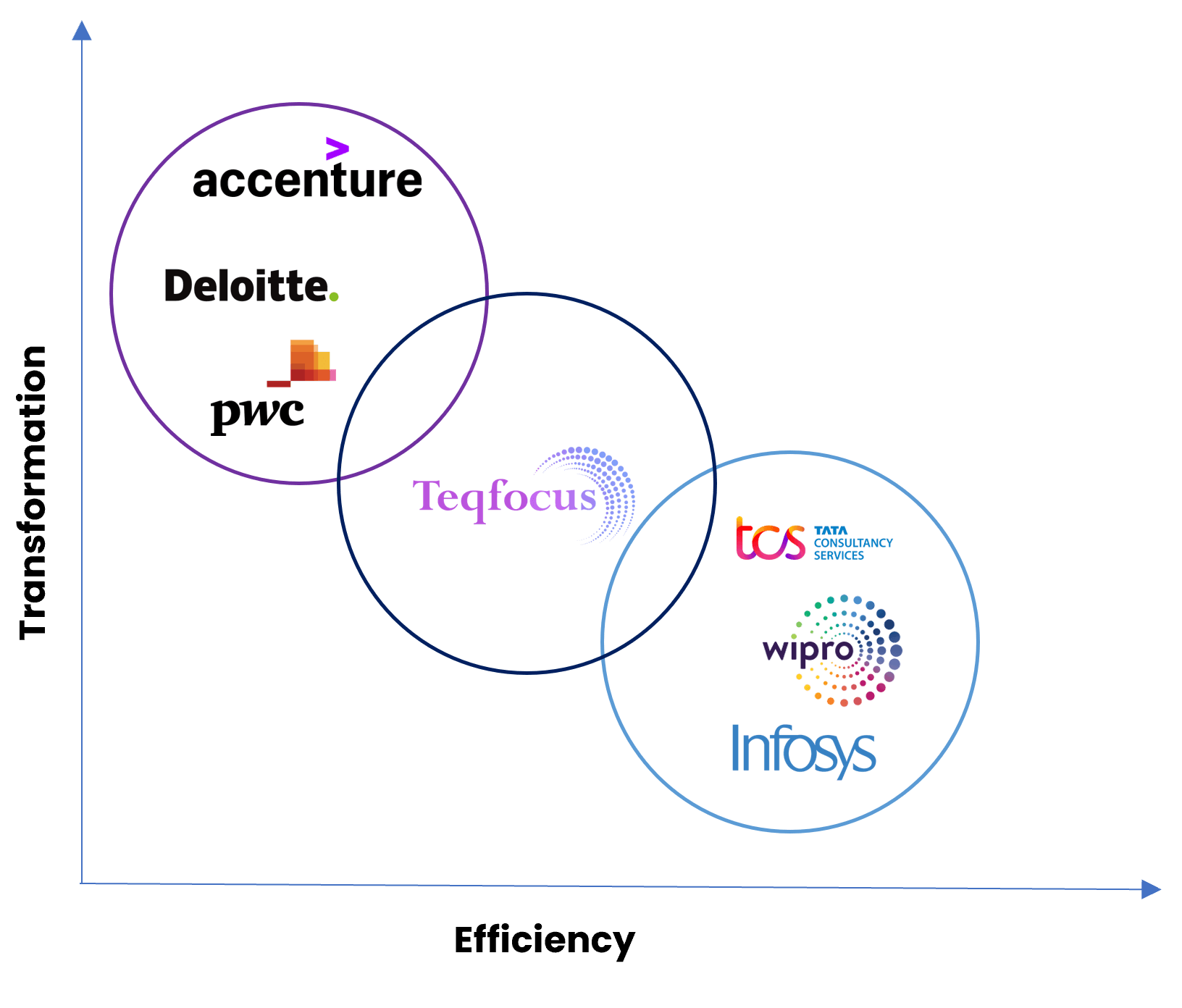
The partner that owns the data layer and the application layer — and operates what it deploys
Most data platform engagements deliver a pipeline. Teqfocus delivers agents that run on it — and keeps them performing through AgentOps managed services.
Market Positioning
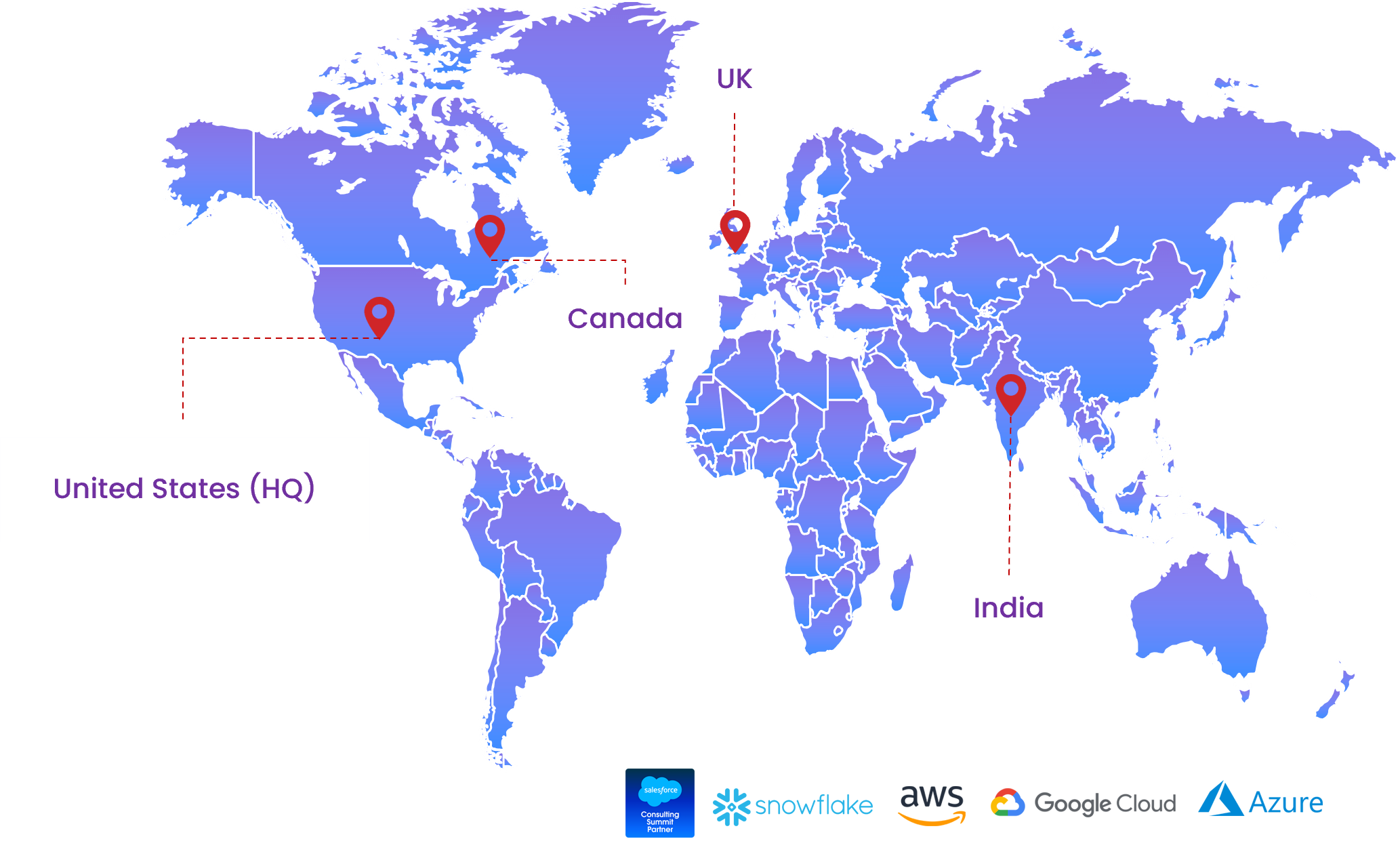
Global Presence
What we're seeing
Active AI footprint — without a standing operate layer
AI health scores, sentiment analysis, playbooks — all in production
Your product portfolio means your team has real agents running across CS, PX, and the Salesforce-native product. That footprint creates the exact operate challenge: each vertical deployed independently, each with its own live KPI that someone needs to own.
Teaching AI ops to enterprise customers — with the same operate gap internally
Gainsight advises hundreds of enterprise CS organizations on how to build accountable AI programs. The accountability model your advisors recommend — ownership, KPIs, ongoing evaluation — is exactly what the Agentic Pod brings to your own AI verticals.
Three product verticals — CS, PX, Gainsight for Salesforce — each a natural pod unit
Each vertical has different use cases, different stakeholders, different success definitions. The pod model was designed for exactly this: vertical-by-vertical deployment with a shared substrate that compounds — each vertical builds on what the previous one created.
What this means for your team
Three things worth saying plainly
The operator function is the gap — not the technology
Your AI is already running. The technology is not the problem.
The gap is ownership: who holds the live KPI for each agent in production, who reviews it weekly, who has authority to adjust when real-world performance drifts from design assumptions.
Build teams roll off. Engineers move to the next project. Without a standing operator function on the business side, programs plateau six months post-launch — not because agents stop working, but because no one is accountable for making them better.
The four-pod model embeds on the business side — not in engineering
The FDE pod pairs with your BSAs to ship use-case skills. The Operator pod holds the live KPI and reports to the business unit — not to engineering. That accountability line is what makes the program durable.
Hard FDE roll-off is built in: when the use case ships and the operator is trained, the FDE exits. The business team owns it.
The Operator pod stays live, holds the metric, and escalates to Platform Support when a skill needs re-architecture. That is the structural difference between a deployment and a program.
The substrate compounds: vertical two costs less than vertical one
What the Builder pod creates on your first vertical — context graph, skills registry, eval harness, data contracts — reuses approximately 40% on vertical two.
CS, PX, and the Salesforce product are not three separate programs. They are three verticals on one substrate. Each one is cheaper to light up than the one before because the foundational assets are already built.
That compounding is the business case — the architecture scales across verticals instead of being rebuilt from scratch for each one.
The operating model
The B·F·O·S Four-Pod Model
Four pods. Each with a distinct function, a distinct accountability line, and a defined roll-on/roll-off schedule. Together they make the program durable — not just deployed.
Architects the foundational substrate: context graph, skills registry, eval harness, and data contracts. What Builder creates on vertical one reuses ~40% on every vertical that follows.
Foundation layerField Deployment Engineers embedded on the business side. Pairs with BSAs to ship individual use-case skills. Hard roll-off when the use case ships — the business team takes ownership.
Use-case deliveryHolds the live KPI. Reports to the business unit, not engineering. Stays live after the FDE rolls off. Reviews agent performance weekly, escalates re-architecture to Platform Support when needed.
Live accountabilityRe-architects skills when performance drifts beyond what the Operator can tune. Owns the shared substrate. Ensures the compounding benefit carries forward to every new vertical.
Substrate integrityProof point
What this looks like in practice
B2B SaaS platform company — Agentic Pod across two product verticals
A B2B SaaS platform with an active AI product portfolio came in with the classic operate gap: multiple agents in production, no standing operator function, KPI reporting happening as a quarterly review exercise rather than a live weekly discipline. The build teams had rolled off. Vertical two was waiting on funding approval for a separate team.
The Builder pod spent six weeks establishing the shared substrate — context graph, eval harness, skills registry — before a single use-case skill was shipped. The FDE pod paired with two BSAs on vertical one and shipped four skills in ten weeks, then executed a hard roll-off. The Operator pod took ownership of the live KPI from week eight and has held it since.
Vertical two launched in week fourteen. The shared substrate from vertical one accelerated delivery by approximately 38%. The Operator pod expanded to cover both verticals with the same headcount. Platform Support handled one skill re-architecture in the first six months as real-world usage patterns diverged from design. The program is still live.
Technology Partners
Teqfocus brings Salesforce Summit, Snowflake Premier, AWS Advanced, and Databricks credentials — the right tool for the right layer, without single-vendor lock-in.
- Summit Consulting Partner
- 200+ Certified Experts
- Sales Cloud, Agentforce, Data Cloud
- Agentforce deployments for Hi-Tech enterprises

- Claude-powered agents in production across regulated industries
- 40+ enterprise Agentforce deployments grounded on Claude
- Teqfocus runs on Claude — we are our own first client
- Premier Services Partner
- 20+ SnowPro Certified
- 50+ customers
- Cortex Agents architecture, dbt governance, and data fabric design
- Certified Consulting Partner
- 20+ AI & data workloads
- MLOps pipelines
- AI governance frameworks and model monitoring

- Advanced Consulting Partner
- Data & Analytics Competency
- 150+ active engagements
- Cloud architecture for enterprise data platforms
Worth a 30-minute conversation?
If your AI program has agents running but no standing operator function, the pod model closes that gap — vertical by vertical, with a substrate that compounds.